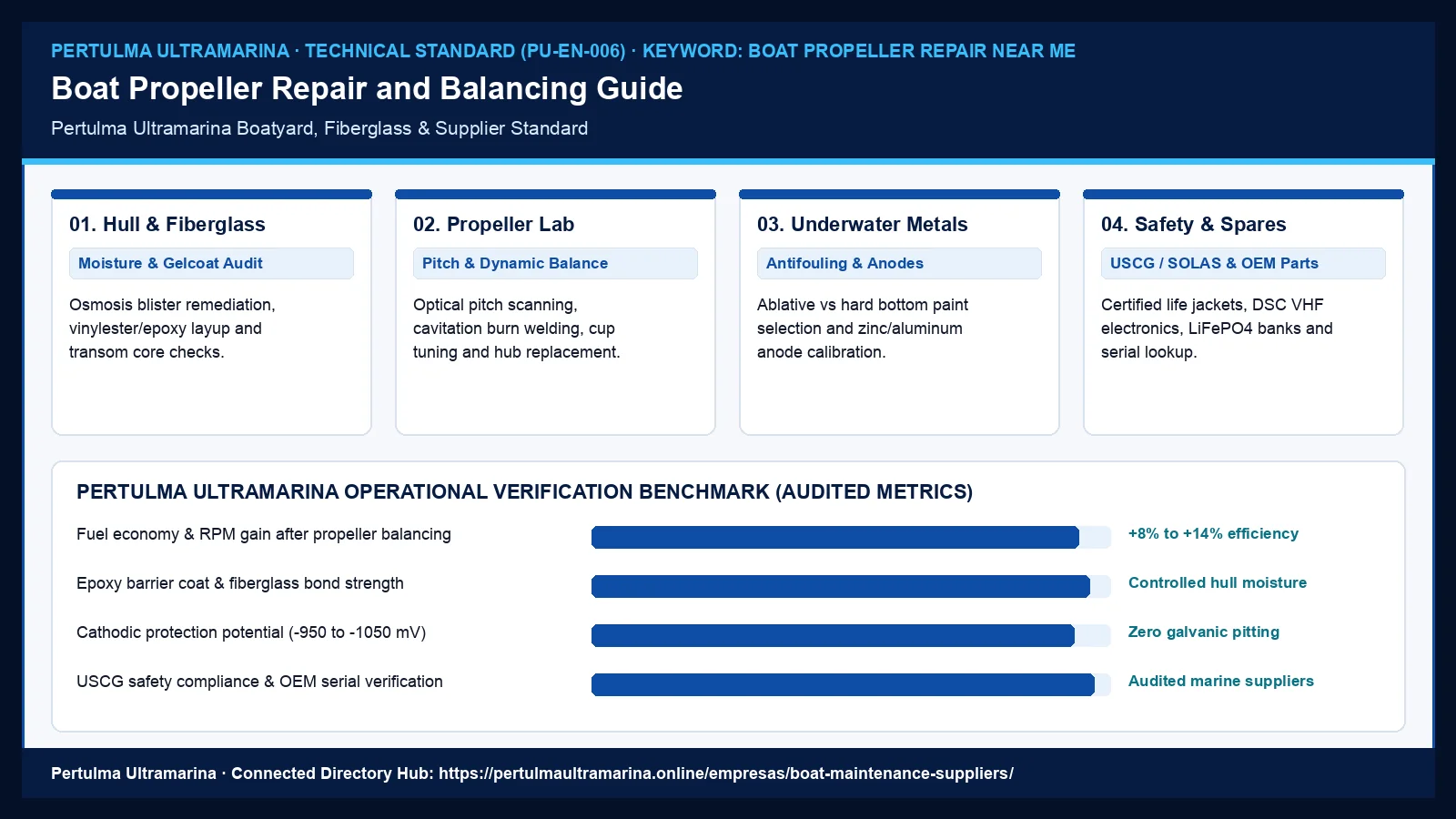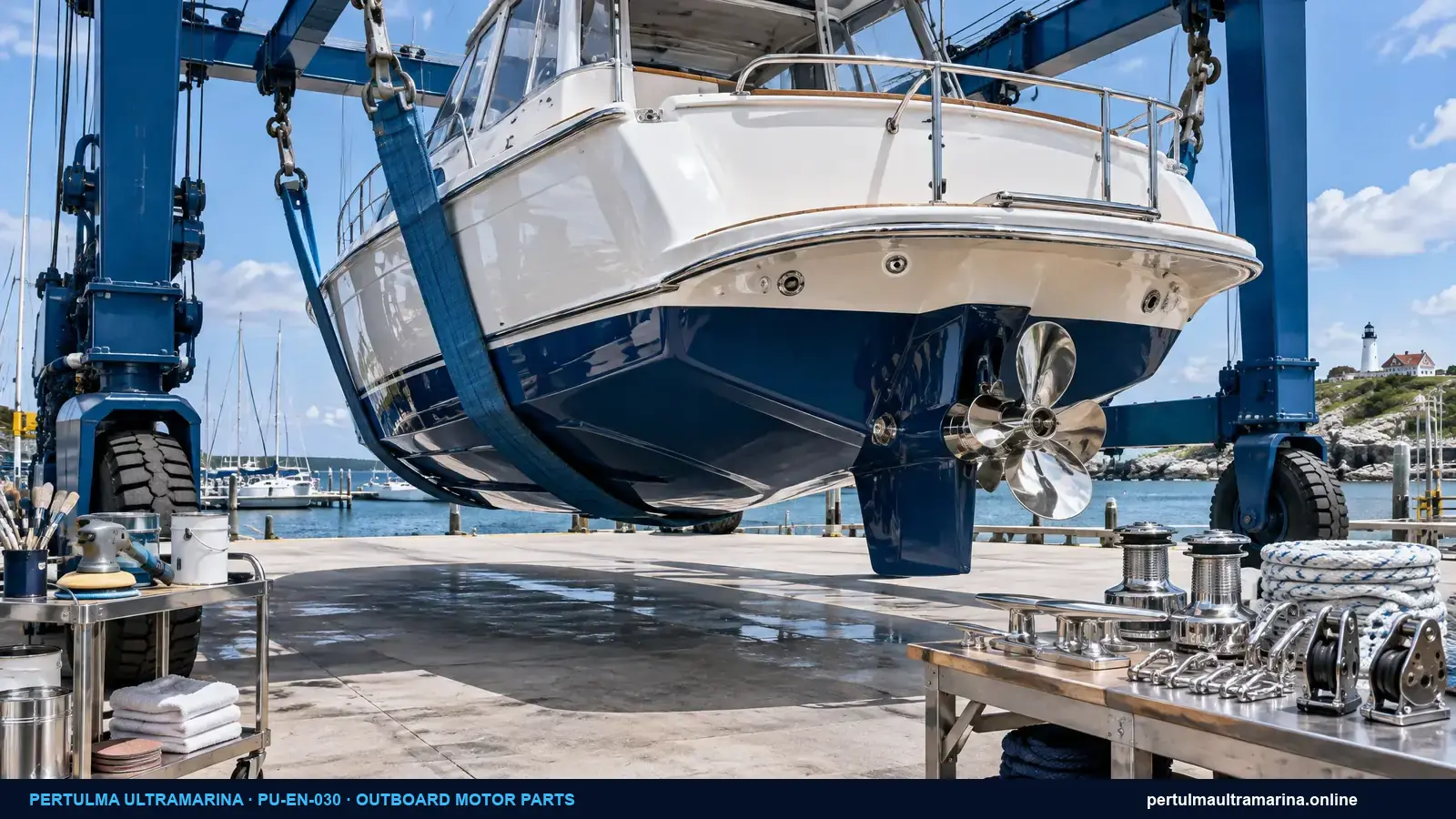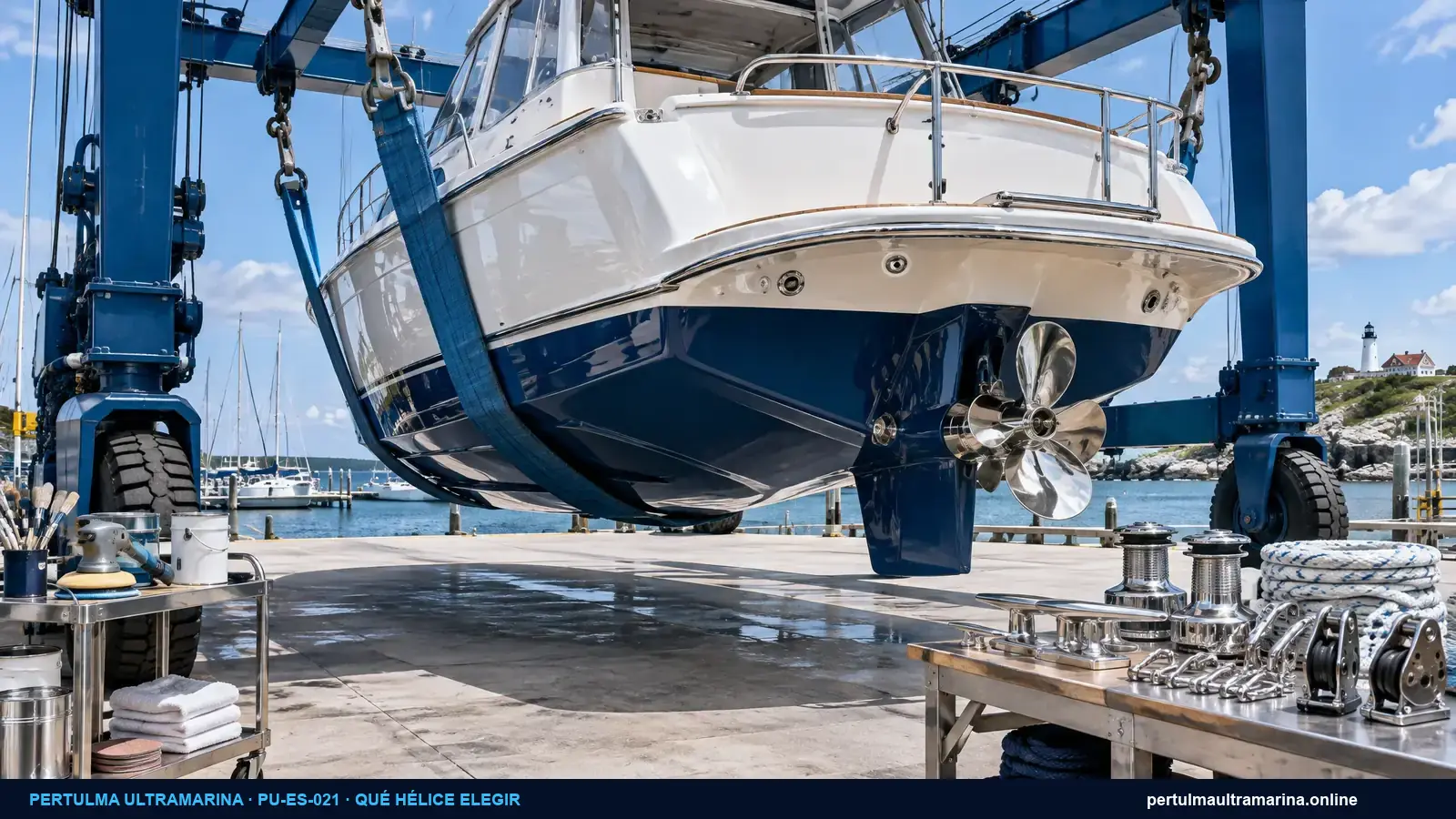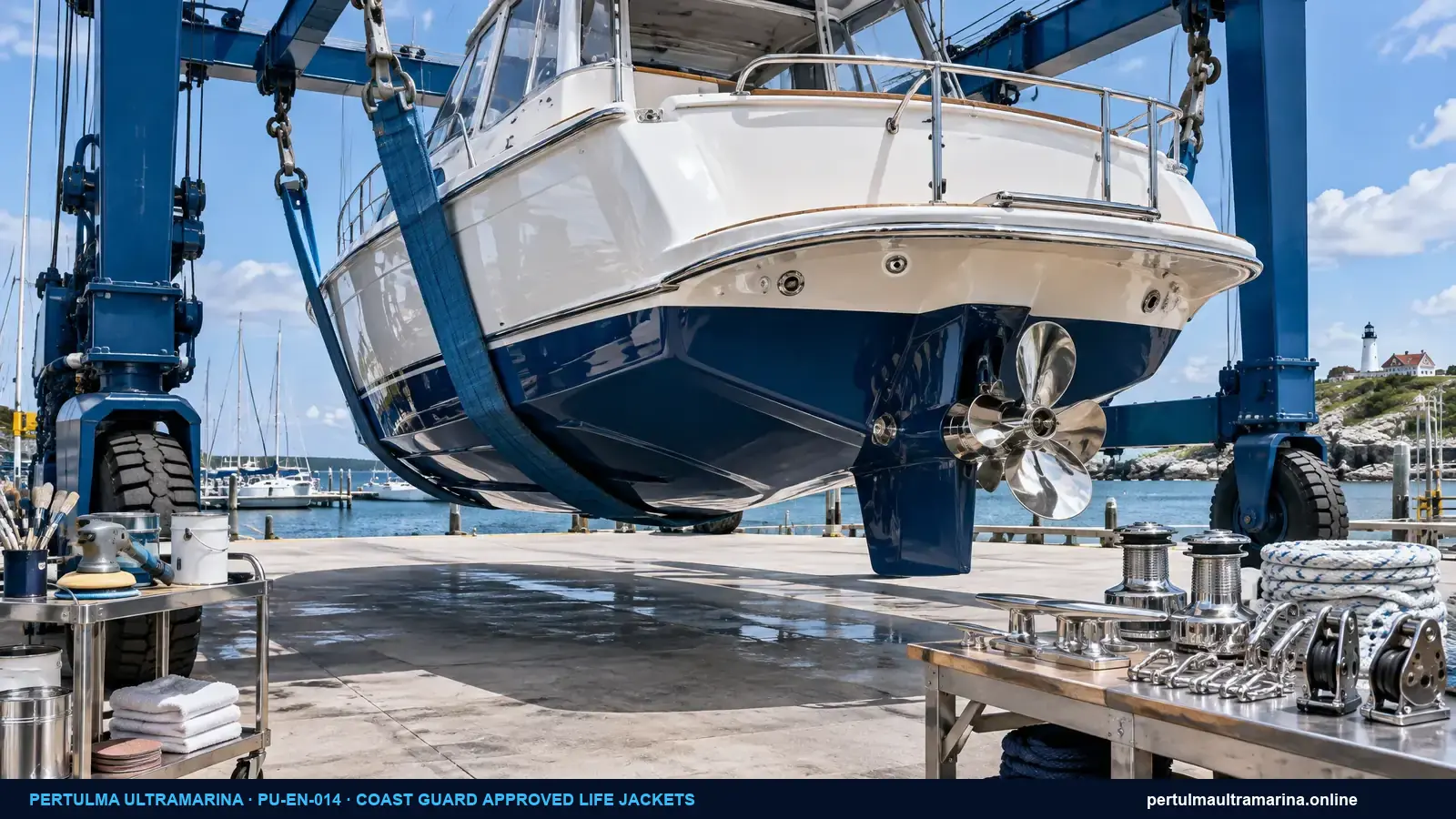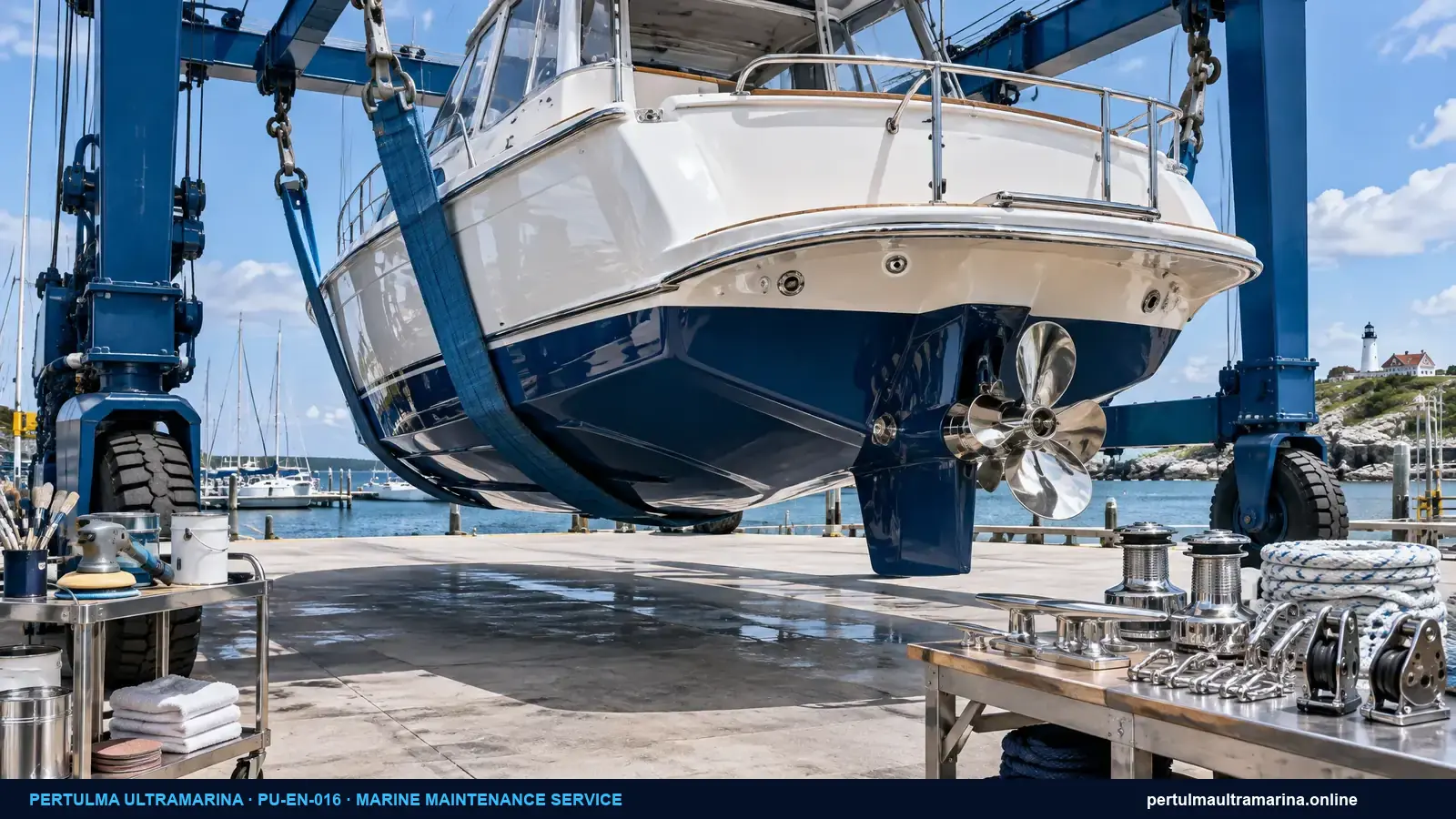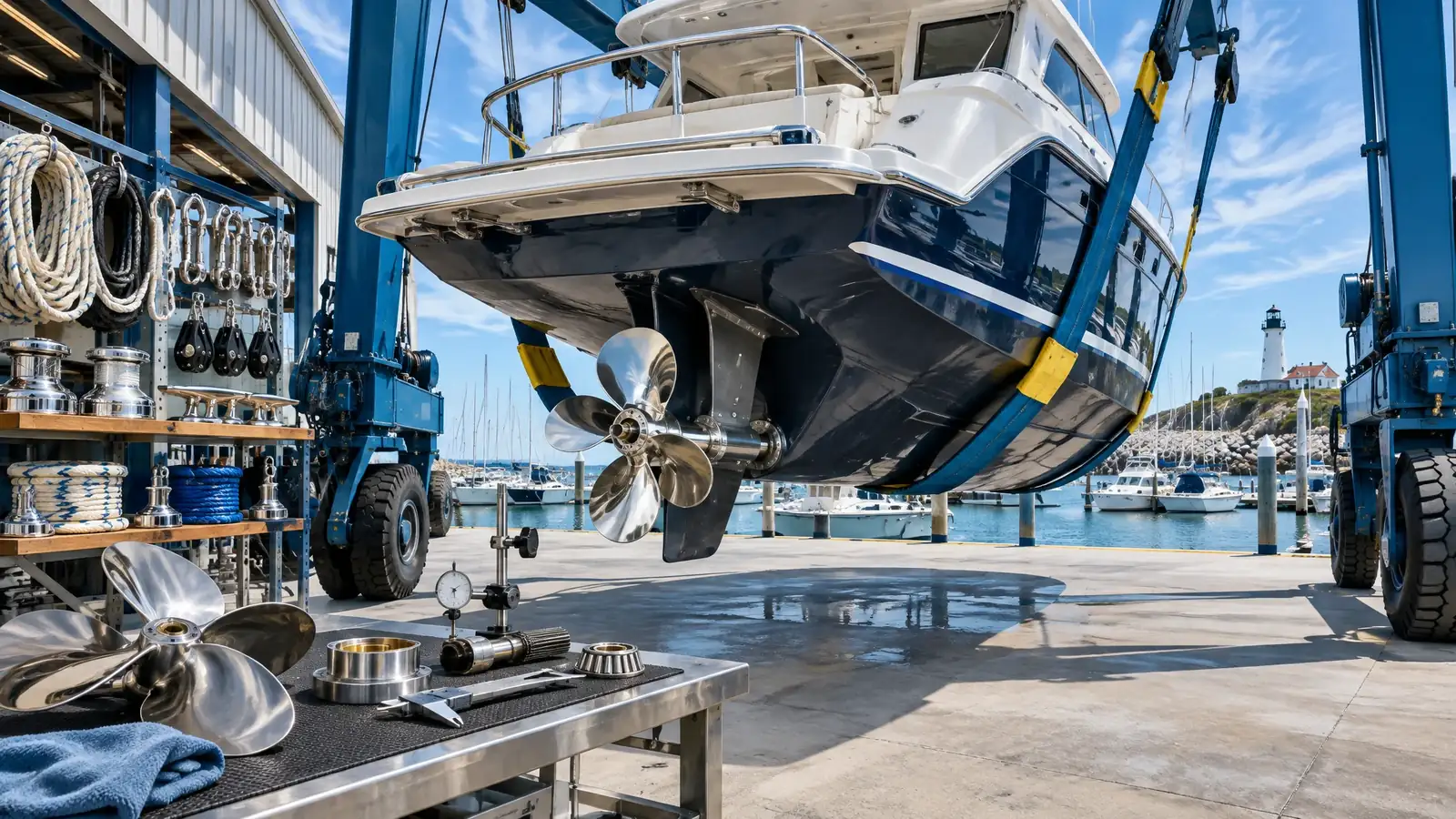
Searching for certified boat propeller repair near me connects vessel owners and fleet managers with precision marine propulsion specialists equipped to diagnose pitch deformation, blade cavitation burn, and dynamic rotational vibration. Through the technical directory of Pertulma Ultramarina, captains and yacht technicians locate verified propeller overhaul facilities, digital optical scanning benches, and certified machine shops operating under international ISO 484 standards.
Hydrodynamics of Marine Propellers: Pitch, Rake, Cup and Slip Dynamics
A marine propeller converts rotary shaft torque into linear forward thrust by establishing a differential pressure gradient across opposing blade faces. The suction face (forward camber) generates negative pressure that draws the vessel forward, while the pressure face (aft surface) accelerates the water stream aft.
Four fundamental geometric parameters govern propeller efficiency and hull interaction:
- Theoretical and Progressive Pitch: Pitch measures the linear distance a propeller would advance through a solid medium during one complete 360-degree rotation. Modern high-rake propellers feature progressive pitch, where pitch increases gradually from the blade root to the trailing edge to match the converging flow field beneath stepped hulls.
- Blade Rake Angle: Rake describes the angle at which the propeller blade tilts forward or aft relative to the hub centerline. Aft rake (typically 15 to 28 degrees) directs the thrust plume downward, lifting the boat bow out of the water to reduce hull wetted surface area and increase cruise speed.
- Trailing Edge Cupping: A curved crescent lip rolled into the trailing tip of the blade, cupping acts as an artificial pitch multiplier. Cupping prevents hydrodynamic ventilation in rough seas, grips aerated surface water on high-speed jack plates, and increases low-end hole shot.
- Propeller Slip Calculation: Calculated as
Slip = ((Pitch x RPM) / (Gear Ratio x 1056) - Actual GPS Speed) / ((Pitch x RPM) / (Gear Ratio x 1056)). Healthy outboard and stern drive setups operate with 8 to 14 percent slip at wide-open throttle; excessive slip indicates incorrect pitch, trailing edge erosion, or aerated water disturbances.
Captains seeking full-service boatyards and chandleries can explore audited marine suppliers in Fiberglass, Refit, Propellers & Marine Suppliers.
Diagnostic Matrix: Propeller Failure Modes, Vibration Signatures and Repair Tolerances
The table below illustrates common hydrodynamic and mechanical propeller anomalies alongside workshop testing thresholds:
| Observed Symptom | Primary Mechanical Cause | Testing and Diagnostic Tooling | Engineering Threshold | Remediation Procedure |
|---|---|---|---|---|
| Hull Vibration at Mid-Cruising RPM | Dynamic unbalance or bent blade tip | ISO digital balancer or static mandrel | Unbalance < 1.0 gram-inch per blade | Cold-press blade reshaping and weight removal |
| Engine Over-Revving Without Speed | Spun rubber hub or sheared drive sleeve | Torsion load test on press fixture | Slippage under 150 lb-ft torque | Hydraulic hub re-pressing or hub kit renewal |
| Pitted Metal on Blade Suction Face | Hydrodynamic cavitation erosion | Visual magnification and depth gauge | Pitting depth < 1.5 mm on blade face | TIG weld filling with ER308L or NiBrAl rod |
| High Fuel Burn and Loss of Top Speed | Inconsistent pitch between blades | Computerized pitch measuring system | Pitch variance < 0.25 inches across blades | Pitch block hammer forming on anvil |
| Transom Buzz and Shaft Seal Failure | Blade tracking runout out of plane | Dial indicator mounted on prop strut | Blade tracking runout < 0.030 inches | Hydraulic pitch tuning on precision mandrels |
For vessels experiencing drivetrain vibration that persists after propeller balancing, cross-reference certified marine mechanics in Outboard Repairs and Diagnostics Guide.
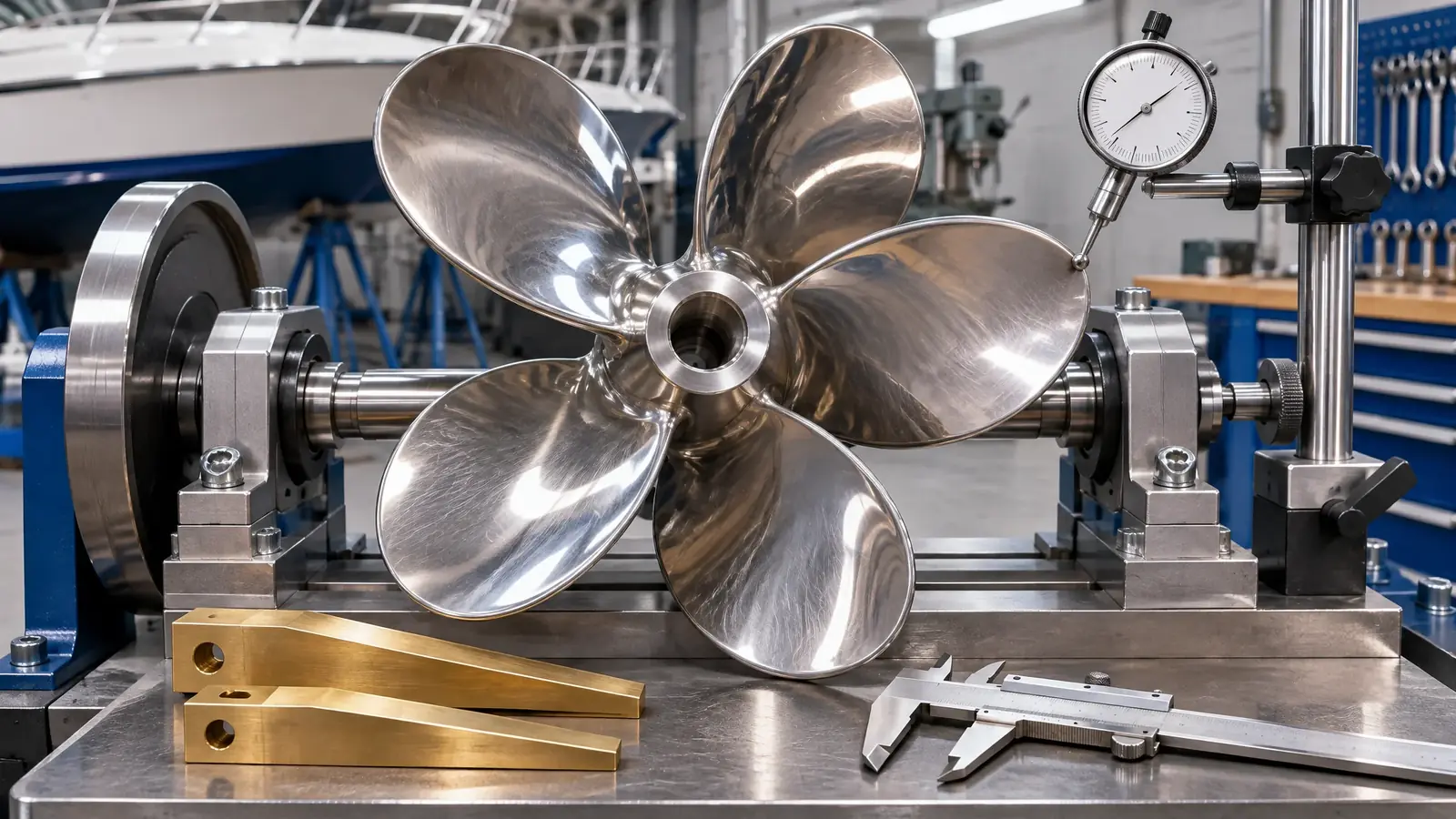
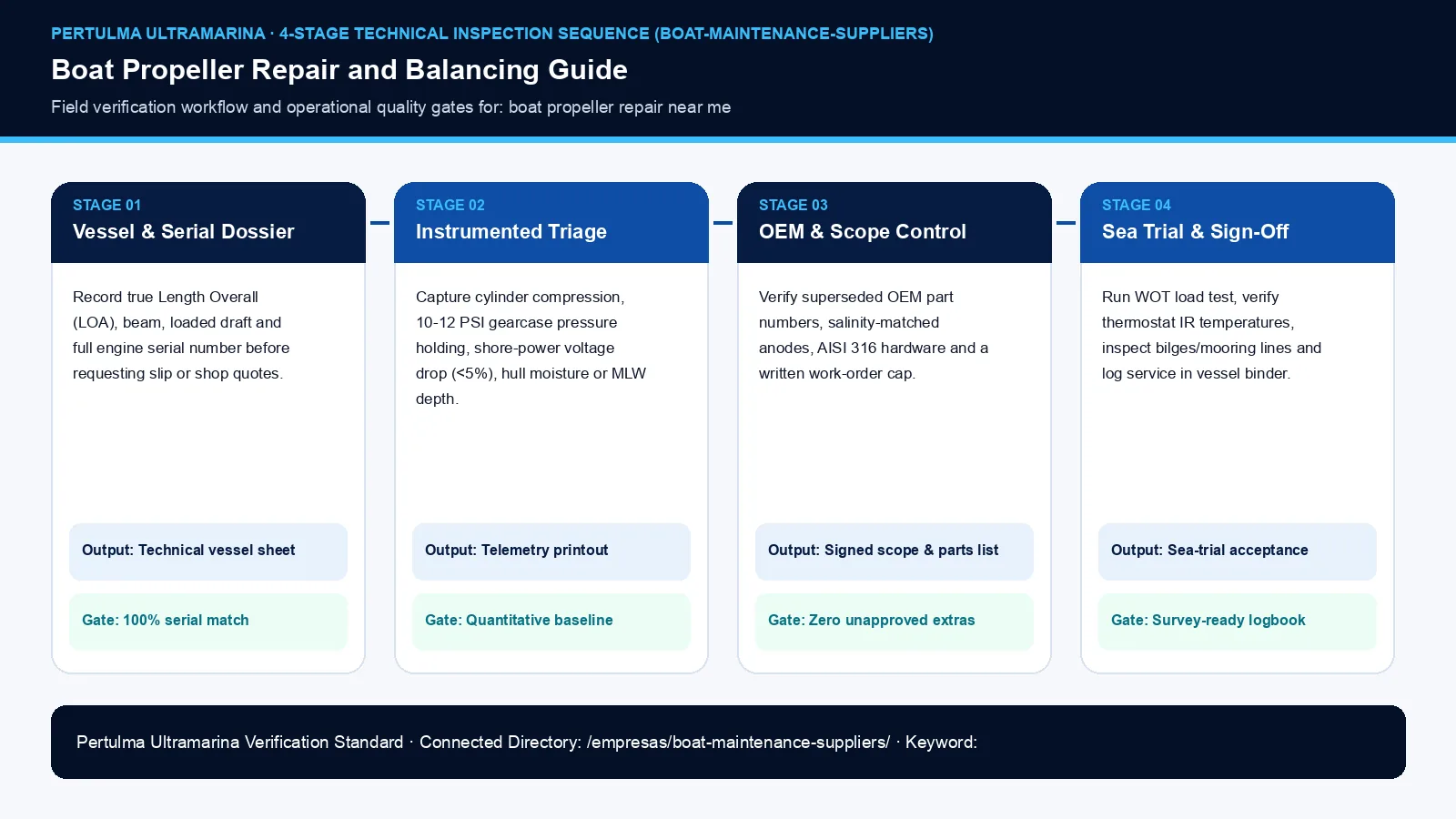
Component-by-Component Field Inspection Breakdown (boat propeller repair near me)
To ensure every boat propeller repair near me evaluation is backed by empirical marine engineering evidence, Pertulma Ultramarina audits four physical subsystems on site:
- Blade-to-Blade Pitch & Rake: Optical pitch measurement across 0.5R to 0.9R radii to eliminate high-RPM cavitation burn.
- Rubber Hub & Spline Integrity: Inspection of pressed rubber hubs or modular drive sleeves for torsional slip marks.
- Propeller Shaft Runout: Dial-indicator check on the prop shaft verifying less than 0.003-inch radial eccentricity.
- Dynamic Mass Balancing: Precision trailing-edge dressing to eliminate harmonic vibration on lower-unit bearings.
Pitch Calibration and Measurement: Pitch Blocks and Optical Scanning
Propeller pitch cannot be measured accurately with a simple carpenter square or tape measure. When a propeller strikes a sandbar, submerged timber, or anchor rode, the impact subtly twists one or two blades out of index without visible tearing.
Professional propeller shops utilize specialized inspection hardware:
- Pitchometer Tables and Precision Anvils: A rotating index plate with graduated radial degree markings and vertical height pointers. Technicians measure blade height at 50, 60, 70, 80, and 90 percent radius radii, comparing actual slope coordinates against manufacturer blueprint tables.
- Optical and Computerized Pitch Scanners: Modern measurement fixtures utilize contact probes or optical lasers to capture thousands of coordinate points across the pressure and suction surfaces. The software maps blade thickness variations, contour curvatures, and pitch deviations in three dimensions, generating an audited compliance report under ISO 484-2 Class S or Class I specifications.
During pitch correction, technicians mount the propeller on heat-treated ductile iron pitch blocks contoured to specific hull models. Using copper-faced hammers and hydraulic ram presses, the metal is cold-worked back into shape. If severe distortion requires pre-heating to prevent micro-fissures, temperatures must be tightly monitored with tempilstiks to preserve heat-treated temper.
To coordinate propeller removal with mobile mechanical assistance at your berth, review our guide on Mobile Boat Repair Services.
Dynamic Balancing: Static Mandrel vs Digital Computerized Spin Balancing
An out-of-balance propeller generates centrifugal forces that pulse through the prop shaft, cutless bearing, and transmission seals thousands of times per minute, rapidly causing structural gearcase fatigue.
Propeller repair shops employ two balancing methodologies:
- Static Gravity Mandrel Balancing: The propeller is mounted on a ground steel arbor resting across parallel horizontal knife-edges. A heavy blade naturally rotates to the bottom position due to gravity. The technician grinds metal from the backside of the heavy blade until the propeller remains stationary at any rotational position.
- Two-Plane Dynamic Digital Spin Balancing: While static balancing corrects static weight discrepancies, it cannot detect dynamic couple unbalance, where weight is offset between the forward hub face and the aft diffuser ring. Digital balancing machines spin the propeller at operating RPM, utilizing piezoelectric accelerometers to isolate the exact angle and gram-weight required on both planes.
Material removal during balancing must occur strictly along the non-working suction face near the hub, preserving blade thickness along the critical outer trailing edge where hydrodynamic loading peaks.
Propeller repairs requiring engine lower unit resealing or shaft runout checks can be cross-referenced with authorized marine workshops in Outboard Motor Repair Shops & Mobile Mechanics.
Cavitation Burn vs Ventilation: Hydrodynamic Diagnostics and Weld Restoration
Captains often confuse cavitation burn with surface ventilation or electrolytic corrosion. Diagnosing the true mechanism is critical to prevent recurring propeller destruction:
- Hydrodynamic Cavitation: Occurs when local water velocity around sharp blade leading edges or surface nicks accelerates so rapidly that hydrostatic pressure drops below water vapor pressure. Microscopic vapor bubbles form, travel across the blade face, and implode violently against the metal surface at pressures exceeding 100,000 PSI. This implosion chips micro-droplets of alloy from the suction face, creating a rough, sponge-like cratered appearance known as cavitation burn.
- Surface Aeration / Ventilation: Occurs when the propeller draws atmospheric air or engine exhaust gas across the blades, causing engine RPM to spike suddenly without forward acceleration. Ventilation causes no metal loss unless aerated operation induces violent cyclic loading.
When cavitation craters exceed 1.0 mm in depth, the blade must be prepped by grinding away oxidized porosity. Technicians then rebuild the blade profile using Gas Tungsten Arc Welding (TIG):
- Stainless Steel Propellers (15-5PH and 17-4PH): Welded using ER308L or ER309L filler wire with pure argon shielding gas to maintain corrosion resistance in hypersaline harbors.
- Nickel-Aluminum-Bronze (NiBrAl) Inboard Propellers: Preheated to 400 degrees Fahrenheit (204 degrees Celsius) and welded using Ampco-Trode nickel-bronze wire, followed by slow cooling inside vermiculite to prevent thermal stress cracking.
To understand structural composite hull repairs following severe groundings or underwater impact events, consult our technical resource on Boat Fiberglass and Gelcoat Repair.
Vetting a Professional Propeller Shop: Metallurgy, Turnaround and Hub Testing
Entrusting high-performance propellers to unqualified machine shops often results in ruined blade geometry, uneven metal thinning, and catastrophic hub failures offshore.
Essential qualifications verified by Pertulma Ultramarina when auditing propeller facilities:
- Computerized Inspection Verification: The facility must provide before-and-after digital pitch scan printouts documenting blade tracking, pitch angles, and ISO 484-2 tolerance compliance.
- Specialized TIG Metallurgy Certification: Mechanics must demonstrate certified welding procedures for duplex stainless steels, bronze alloys, and heat-treated aluminum castings.
- Hub Torsion Testing: The shop must inspect and replace rubber press-in torsion hubs using hydraulic arbor presses, verifying torque retention before delivery.
- Propeller Shaft Fitment and Lapping: For inboard taper-fit propellers, the shop should offer bluing and hand-lapping services against the customer shaft taper to ensure a minimum of 80 percent contact surface area.
Vessel captains can inspect certified propeller repairers and commercial marine shipyards in our comprehensive business directory at Pertulma Ultramarina Marine Directory and the main index at Pertulma Ultramarina to protect their vessel propulsion investments.
Frequently Asked Questions
How can I tell if my boat propeller is out of pitch or bent?
Common symptoms include unexplained hull vibration at specific RPM ranges, inability of the engine to reach its recommended wide-open throttle (WOT) operating range, severe listing under acceleration, and increased fuel consumption without changes in vessel displacement.
What is the difference between repairing an aluminum propeller and a stainless steel propeller?
Aluminum propellers are constructed from cast aluminum alloy; they absorb minor grounding impacts by yielding or bending, but their low ductility makes them prone to cracking during repeated straightening. Stainless steel propellers are five times stronger, feature thinner and more efficient blade profiles, and can be heated, welded, and re-pitched multiple times with exceptional fatigue resistance.
How much does professional propeller pitch calibration and repair cost?
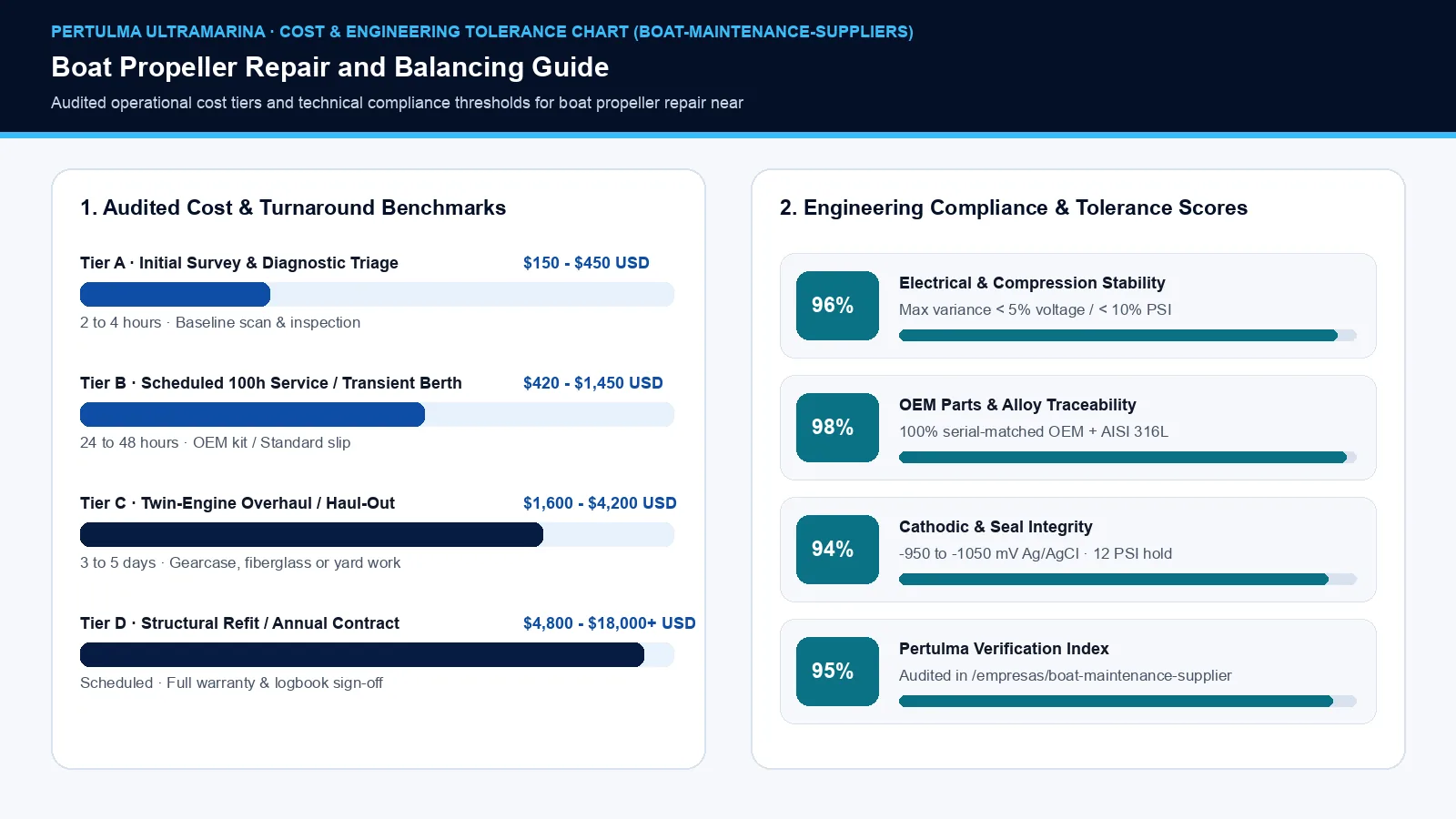
Standard reconditioning and pitch calibration for a three-blade aluminum outboard propeller ranges from 60 to 120 dollars. A stainless steel outboard or stern drive propeller reconditioning with digital pitch scanning typically costs between 180 and 350 dollars. Large inboard bronze or NiBrAl propellers range from 450 to over 1,200 dollars depending on diameter.
What causes a rubber propeller hub to slip?
Rubber hubs press-fitted into the propeller barrel act as a shock absorber to protect engine gears from sudden impact. Overheating due to exhaust gas restriction, repeated heavy shifting into gear at high RPM, or age-related ozone dry-rot breaks the bond between the inner splined bronze sleeve and the outer rubber cylinder, allowing the engine shaft to spin freely while the propeller slips under load.